
Lifeboat Performance Testing: 10 Key Indicators for Ensuring Safety at Sea
Kailun Marine Electrical & Mechanical2026-06-01
Lifeboats are essential standard equipment for maritime emergency rescue operations and represent the final line of defence for crew and passengers in the event of an emergency. The reliability and stability of their overall performance directly determine the success rate of maritime evacuations, and they are also a mandatory assessment criterion for annual ship inspections, classification certification and compliant operation. As global shipping safety standards continue to evolve, the SOLAS Convention and the China Classification Society (CCS) inspection regulations have progressively refined the testing requirements for lifesaving equipment, setting higher standards for the structural strength, environmental adaptability and emergency performance of lifeboats. Taizhou Kailun Marine Electrical & Mechanical Co., Ltd. has long specialised in the research, development, production and standardised testing of marine lifesaving equipment. Strictly adhering to both international and domestic standards, the company implements ten core performance test indicators to control product quality at the source, thereby comprehensively ensuring the safe, stable and effective operation of all types of marine lifeboats under complex sea conditions.
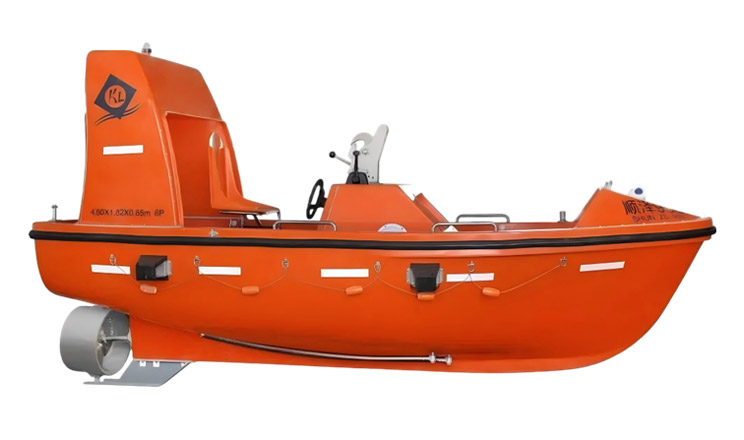
The third test, assessing drop impact performance, is primarily designed for hoist-launched and free-fall lifeboats. It simulates real-world conditions of a free fall into the water from the rated safety height to ensure that the main hull structure, connecting fasteners and sealing components show no cracks, detachment or deformation, and that the equipment inside the lifeboat remains intact and ready for immediate use. The fourth test, the watertight integrity test, involves comprehensive scenario-based trials including continuous immersion, high-pressure spraying and negative pressure sealing tests. It rigorously inspects critical areas such as the hull, hatches, windows, seams and access hatches to prevent seawater ingress, thereby avoiding hull weight gain, instability and failure caused by water ingress. The fifth test, the propulsion and navigation performance test, focuses on verifying the main engine’s cold start success rate, rated speed, continuous endurance and manoeuvrability. This ensures the vessel can navigate autonomously and steer flexibly when fully loaded, meeting operational requirements for long-distance maritime evacuation, self-rescue and awaiting rescue.
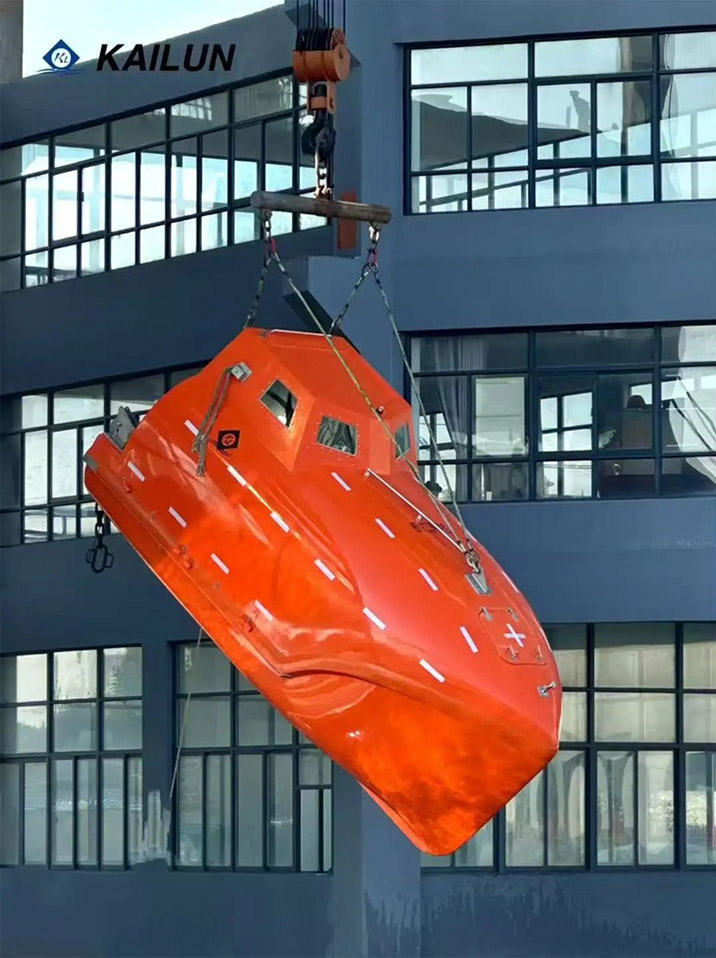
The sixth test, involving cold-weather start-up and weather resistance, is designed for deep-sea routes, cold waters at high latitudes and coastal environments with high salt fog levels. It assesses the start-up and operational performance of the lifeboat’s propulsion system and electrical equipment under conditions of alternating high and low temperatures and in damp, corrosive environments, ensuring that the equipment fully meets standards for resistance to ageing, corrosion and weathering, and is suitable for operation in all maritime environments. The seventh test, the fire resistance and thermal insulation test, is designed to address fire emergencies on board ships. It assesses the hull’s flame-retardant, thermal insulation and high-temperature resistance properties, enabling it to withstand brief exposure to open flames and intense heat waves at sea. This secures valuable time for the evacuation and escape of people in distress, significantly improving survival rates in fire situations.
The eighth test, covering the braking and launching systems, focuses on the safety and stability of the lifeboat’s davits, braking mechanisms and locking mechanisms. Repeated lifting, braking and locking tests are conducted to ensure the launching process is smooth and seamless, with no jamming, slipping or risk of brake failure, thereby preventing safety incidents during launching operations. The ninth test, the emergency equipment compatibility test, comprehensively verifies the secure installation and functional integrity of onboard facilities such as life jackets, emergency signal lights, audible and visual alarm devices, water and power supply equipment, and maritime communication equipment, ensuring that all such equipment can be activated normally in an emergency. The tenth test, the overall structural strength test, involves conducting multiple tests—including pressure, impact, tensile and compression tests—using specialised equipment to verify the robustness and durability of the hull materials and overall structure, ensuring they meet the strength requirements for long-term operation in complex maritime conditions and high-frequency use.
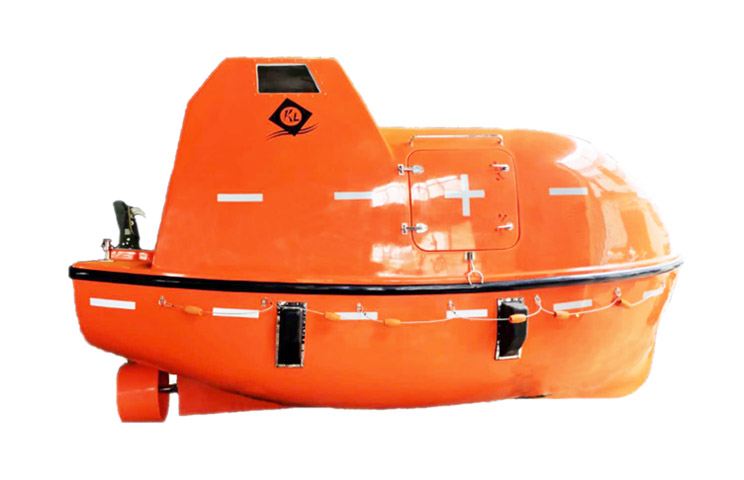
Lifeboat performance testing is a crucial aspect of ensuring vessel safety; each test parameter corresponds to a real-life emergency scenario at sea and serves as an indispensable quality assurance measure for the safe operation of vessels. As a specialist marine equipment manufacturer based in Taizhou, Taizhou Kailun Marine Electrical & Mechanical Co., Ltd. has established a comprehensive set of standardised testing procedures and adheres to rigorous quality control standards. All lifeboats leaving the factory or undergoing maintenance have undergone a full range of ten performance tests, fully complying with international maritime conventions and domestic ship inspection regulations. Moving forward, the company will continue to keep pace with new industry standards and regulations, constantly optimising its testing systems and upgrading product performance. Through high-quality, highly reliable marine lifesaving equipment, we are committed to building a robust safeguard for the safe maritime operations of shipping enterprises.
The third test, assessing drop impact performance, is primarily designed for hoist-launched and free-fall lifeboats. It simulates real-world conditions of a free fall into the water from the rated safety height to ensure that the main hull structure, connecting fasteners and sealing components show no cracks, detachment or deformation, and that the equipment inside the lifeboat remains intact and ready for immediate use. The fourth test, the watertight integrity test, involves comprehensive scenario-based trials including continuous immersion, high-pressure spraying and negative pressure sealing tests. It rigorously inspects critical areas such as the hull, hatches, windows, seams and access hatches to prevent seawater ingress, thereby avoiding hull weight gain, instability and failure caused by water ingress. The fifth test, the propulsion and navigation performance test, focuses on verifying the main engine’s cold start success rate, rated speed, continuous endurance and manoeuvrability. This ensures the vessel can navigate autonomously and steer flexibly when fully loaded, meeting operational requirements for long-distance maritime evacuation, self-rescue and awaiting rescue.
The sixth test, involving cold-weather start-up and weather resistance, is designed for deep-sea routes, cold waters at high latitudes and coastal environments with high salt fog levels. It assesses the start-up and operational performance of the lifeboat’s propulsion system and electrical equipment under conditions of alternating high and low temperatures and in damp, corrosive environments, ensuring that the equipment fully meets standards for resistance to ageing, corrosion and weathering, and is suitable for operation in all maritime environments. The seventh test, the fire resistance and thermal insulation test, is designed to address fire emergencies on board ships. It assesses the hull’s flame-retardant, thermal insulation and high-temperature resistance properties, enabling it to withstand brief exposure to open flames and intense heat waves at sea. This secures valuable time for the evacuation and escape of people in distress, significantly improving survival rates in fire situations.
The eighth test, covering the braking and launching systems, focuses on the safety and stability of the lifeboat’s davits, braking mechanisms and locking mechanisms. Repeated lifting, braking and locking tests are conducted to ensure the launching process is smooth and seamless, with no jamming, slipping or risk of brake failure, thereby preventing safety incidents during launching operations. The ninth test, the emergency equipment compatibility test, comprehensively verifies the secure installation and functional integrity of onboard facilities such as life jackets, emergency signal lights, audible and visual alarm devices, water and power supply equipment, and maritime communication equipment, ensuring that all such equipment can be activated normally in an emergency. The tenth test, the overall structural strength test, involves conducting multiple tests—including pressure, impact, tensile and compression tests—using specialised equipment to verify the robustness and durability of the hull materials and overall structure, ensuring they meet the strength requirements for long-term operation in complex maritime conditions and high-frequency use.
Lifeboat performance testing is a crucial aspect of ensuring vessel safety; each test parameter corresponds to a real-life emergency scenario at sea and serves as an indispensable quality assurance measure for the safe operation of vessels. As a specialist marine equipment manufacturer based in Taizhou, Taizhou Kailun Marine Electrical & Mechanical Co., Ltd. has established a comprehensive set of standardised testing procedures and adheres to rigorous quality control standards. All lifeboats leaving the factory or undergoing maintenance have undergone a full range of ten performance tests, fully complying with international maritime conventions and domestic ship inspection regulations. Moving forward, the company will continue to keep pace with new industry standards and regulations, constantly optimising its testing systems and upgrading product performance. Through high-quality, highly reliable marine lifesaving equipment, we are committed to building a robust safeguard for the safe maritime operations of shipping enterprises.