
Developments in Lifeboat Technology: 5 Key Trends for Future Maritime Safety
Kailun Marine Electrical & Mechanical2026-06-15
Marine lifeboats represent the final line of defence for life at sea. With the introduction of new IMO carbon emission regulations, the increasing frequency of extreme weather at sea, and the shift towards intelligent shipping, traditional diesel-powered, mechanically operated lifeboats are no longer able to meet high safety standards. Taizhou Kailun Marine Electrical & Mechanical Co., Ltd., a company specialising in the R&D and manufacturing of marine lifeboats, davits and power distribution systems, has drawn upon three years of practical installation experience and global industry developments to identify five core technological trends that will shape the future landscape of maritime safety, thereby providing clear guidance for shipowners and shipyards seeking to upgrade their equipment.
Trend 1: Full-scenario intelligent digitalisation, shifting from manual operations to autonomous control
Intelligent technology is the primary focus of this transformation. The new generation of lifeboats is equipped with Beidou and Iridium dual-mode communication, multi-spectral sensors, and real-time CO₂/temperature and humidity monitoring modules within the cabin, replacing the outdated single-mode GPS positioning systems. The system can interface with the mother ship’s monitoring platform to enable one-touch release, adaptive route planning, and automatic roll reduction in rough seas, ensuring stable navigation even in conditions with 30-degree roll. Kailun’s proprietary intelligent electronic control unit integrates the release hook, engine and ventilation system into a unified control panel, meeting the latest IMO mandatory ventilation standard of 5 m³ per person per hour, whilst providing real-time alerts for harmful gases in the cabin and automatically adjusting ventilation. Industry data indicates that the market share of intelligent lifeboats will reach 38% by 2026 and exceed 55% by 2030.
Trend 2: The widespread adoption of green, low-carbon powertrains, with hybrid and lithium-ion battery vehicles gradually replacing pure diesel vehicles
The wave of decarbonisation in the shipping industry is extending to lifesaving equipment, with traditional diesel lifeboats facing pressure to reduce emissions and be phased out. The three mainstream approaches for the future are diesel-lithium-ion hybrid systems, solar-assisted energy storage, and small hydrogen fuel cells. The hybrid system operates in a standard silent lithium-ion cruising mode, with the diesel generator starting up in emergencies to ensure long-range capability; flexible solar panels on the roof continuously recharge the batteries, significantly reducing fuel consumption and exhaust emissions. Kailun has already delivered hybrid lifeboat power control kits in bulk, resolving challenges related to high- and low-voltage compatibility and battery thermal protection, and adapting to retrofits for various vessel types in both ocean-going and inland waterway fleets. Concurrently, the IMO is tightening emission limits for lifeboats, requiring older diesel-powered vessels to be upgraded or replaced by 2028, creating a market replacement opportunity exceeding 2.4 billion yuan.
Trend 3: The widespread adoption of lightweight, high-strength composite materials, striking a balance between impact resistance, corrosion resistance and load-bearing capacity
Traditional steel hulls are heavy and susceptible to rapid salt spray corrosion; new models have shifted entirely to composite structures combining carbon fibre and high-strength fibreglass. For vessels of the same size, this reduces the hull weight by over 25%, freeing up more space for life-support equipment and battery systems, whilst significantly improving impact resistance, fire resistance and resistance to seawater corrosion. Combined with a modular sectional assembly process, this means that components can be repaired or replaced without the need for a complete overhaul, doubling the maintenance interval. Kailun Electromechanical has optimised the load-release parameters of the lifting brackets for lightweight hulls and calibrated the winch’s variable-frequency braking system to strictly comply with the SOLAS limit of 1.3 m/s for lifting speeds.
Trend 4: Integrated life-saving systems are being upgraded, with single lifeboats transforming into compact maritime survival platforms
The new regulations no longer focus solely on buoyancy and navigation, but also impose stringent requirements on the living conditions within the lifeboats. Future lifeboats will be equipped with climate-controlled ventilation, compact medical emergency modules, water purification and recirculation systems, and long-lasting emergency lighting, enabling occupants to survive in stable conditions for 72 hours. Certain high-end ocean-going models are equipped with basic A-CPR resuscitation equipment and intelligent supply distribution compartments; in the event of extreme fire or sinking scenarios, enhanced sprinkler fire protection and airtight isolation desi
Trend 5: Modular integrated design, enabling rapid maintenance and adaptation to customisation requirements across multiple vessel types
Integrated modular design is key to reducing costs and improving efficiency. The propulsion, electrical control, communication and release mechanisms are all designed as standard modules, allowing faulty components to be quickly swapped out, thereby reducing dry-dock repair times by 60%. The same basic platform can be rapidly switched between two release modes—free-fall and gravity-hoist—making it suitable for a wide range of applications, including container ships, bulk carriers, fishing vessels and offshore wind farm maintenance vessels. Leveraging the strengths of the Taizhou shipbuilding industry cluster, Kailun standardises the production of complete sets of electromechanical modules, supporting shipyards in customising and commissioning them as required, thereby shortening the assembly cycle for lifesaving equipment on newbuilds.
Source: Taizhou Kailun Marine Electrical & Mechanical Co., Ltd.
References:
1. IMO MSC.535 (107) and MSC.559 (108) Amendments to the LSA Code (Life-Saving Appliances)
2. SOLAS (International Convention for the Safety of Life at Sea) 2026 Supplement
3. China Classification Society (CCS) ‘Survival Craft Inspection Code’
4. 2026 Global Survival Craft Industry Market Trends Research Report
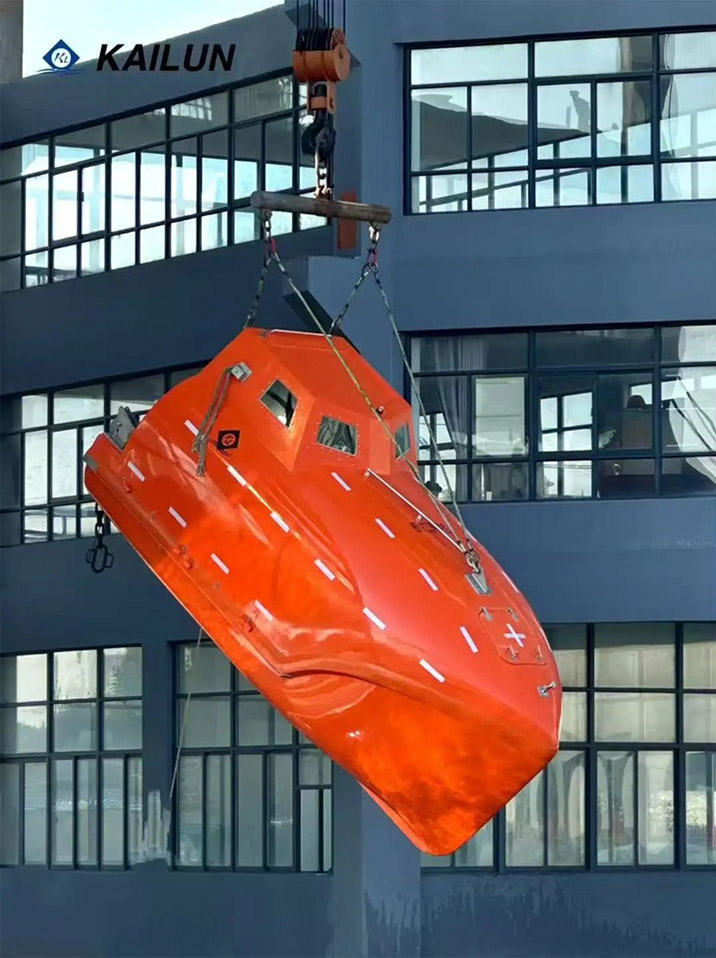
Totally Enclosed Free-Fall Lifeboats
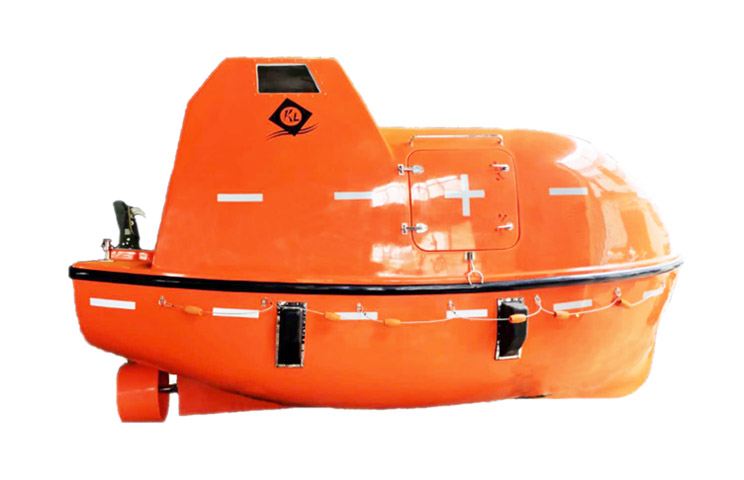
Totally Enclosed Lifeboats/Rescue Boat
Trend 1: Full-scenario intelligent digitalisation, shifting from manual operations to autonomous control
Intelligent technology is the primary focus of this transformation. The new generation of lifeboats is equipped with Beidou and Iridium dual-mode communication, multi-spectral sensors, and real-time CO₂/temperature and humidity monitoring modules within the cabin, replacing the outdated single-mode GPS positioning systems. The system can interface with the mother ship’s monitoring platform to enable one-touch release, adaptive route planning, and automatic roll reduction in rough seas, ensuring stable navigation even in conditions with 30-degree roll. Kailun’s proprietary intelligent electronic control unit integrates the release hook, engine and ventilation system into a unified control panel, meeting the latest IMO mandatory ventilation standard of 5 m³ per person per hour, whilst providing real-time alerts for harmful gases in the cabin and automatically adjusting ventilation. Industry data indicates that the market share of intelligent lifeboats will reach 38% by 2026 and exceed 55% by 2030.
Trend 2: The widespread adoption of green, low-carbon powertrains, with hybrid and lithium-ion battery vehicles gradually replacing pure diesel vehicles
The wave of decarbonisation in the shipping industry is extending to lifesaving equipment, with traditional diesel lifeboats facing pressure to reduce emissions and be phased out. The three mainstream approaches for the future are diesel-lithium-ion hybrid systems, solar-assisted energy storage, and small hydrogen fuel cells. The hybrid system operates in a standard silent lithium-ion cruising mode, with the diesel generator starting up in emergencies to ensure long-range capability; flexible solar panels on the roof continuously recharge the batteries, significantly reducing fuel consumption and exhaust emissions. Kailun has already delivered hybrid lifeboat power control kits in bulk, resolving challenges related to high- and low-voltage compatibility and battery thermal protection, and adapting to retrofits for various vessel types in both ocean-going and inland waterway fleets. Concurrently, the IMO is tightening emission limits for lifeboats, requiring older diesel-powered vessels to be upgraded or replaced by 2028, creating a market replacement opportunity exceeding 2.4 billion yuan.
Trend 3: The widespread adoption of lightweight, high-strength composite materials, striking a balance between impact resistance, corrosion resistance and load-bearing capacity
Traditional steel hulls are heavy and susceptible to rapid salt spray corrosion; new models have shifted entirely to composite structures combining carbon fibre and high-strength fibreglass. For vessels of the same size, this reduces the hull weight by over 25%, freeing up more space for life-support equipment and battery systems, whilst significantly improving impact resistance, fire resistance and resistance to seawater corrosion. Combined with a modular sectional assembly process, this means that components can be repaired or replaced without the need for a complete overhaul, doubling the maintenance interval. Kailun Electromechanical has optimised the load-release parameters of the lifting brackets for lightweight hulls and calibrated the winch’s variable-frequency braking system to strictly comply with the SOLAS limit of 1.3 m/s for lifting speeds.
Trend 4: Integrated life-saving systems are being upgraded, with single lifeboats transforming into compact maritime survival platforms
The new regulations no longer focus solely on buoyancy and navigation, but also impose stringent requirements on the living conditions within the lifeboats. Future lifeboats will be equipped with climate-controlled ventilation, compact medical emergency modules, water purification and recirculation systems, and long-lasting emergency lighting, enabling occupants to survive in stable conditions for 72 hours. Certain high-end ocean-going models are equipped with basic A-CPR resuscitation equipment and intelligent supply distribution compartments; in the event of extreme fire or sinking scenarios, enhanced sprinkler fire protection and airtight isolation desi
Trend 5: Modular integrated design, enabling rapid maintenance and adaptation to customisation requirements across multiple vessel types
Integrated modular design is key to reducing costs and improving efficiency. The propulsion, electrical control, communication and release mechanisms are all designed as standard modules, allowing faulty components to be quickly swapped out, thereby reducing dry-dock repair times by 60%. The same basic platform can be rapidly switched between two release modes—free-fall and gravity-hoist—making it suitable for a wide range of applications, including container ships, bulk carriers, fishing vessels and offshore wind farm maintenance vessels. Leveraging the strengths of the Taizhou shipbuilding industry cluster, Kailun standardises the production of complete sets of electromechanical modules, supporting shipyards in customising and commissioning them as required, thereby shortening the assembly cycle for lifesaving equipment on newbuilds.
Source: Taizhou Kailun Marine Electrical & Mechanical Co., Ltd.
References:
1. IMO MSC.535 (107) and MSC.559 (108) Amendments to the LSA Code (Life-Saving Appliances)
2. SOLAS (International Convention for the Safety of Life at Sea) 2026 Supplement
3. China Classification Society (CCS) ‘Survival Craft Inspection Code’
4. 2026 Global Survival Craft Industry Market Trends Research Report
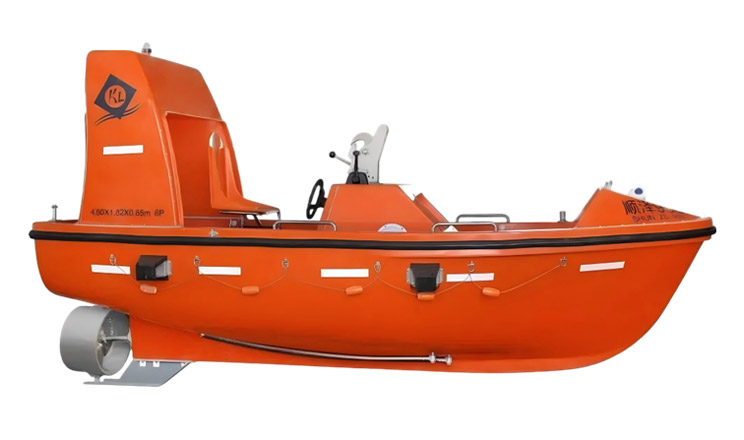
Rescue boat(Built-in unit)
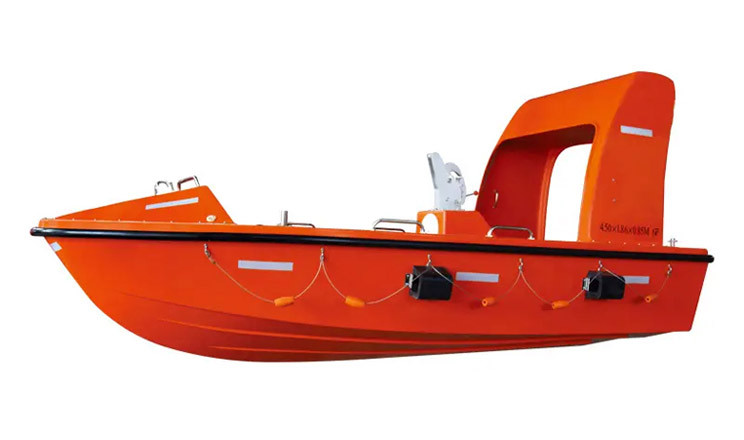
Rescue boat(Outdoor unit)
Totally Enclosed Free-Fall Lifeboats
Totally Enclosed Lifeboats/Rescue Boat