
Tragedies are occurring with alarming frequency! New, stricter regulations than ever before have been introduced for lifeboat launching systems; all ocean-going vessels must carry out self-inspections.
Kailun Marine Electrical & Mechanical2026-06-27
Recently, there have been a series of safety incidents worldwide involving lifeboats falling overboard or accidentally becoming unhooked, resulting in injuries and fatalities amongst crew members, whilst several ocean-going vessels have been detained by port states due to defects in their launching equipment; the final line of defence for maritime survival has frequently failed. With IMO Resolution MSC.554 (108) set to come into force on 1 January 2026, the most stringent regulatory era in history for lifeboat and rescue boat launching appliances is upon us. The window of opportunity for the concentrated retrofitting of older vessels has now fully opened; major shipping companies and shipowners must immediately carry out self-inspections and rectifications of all lifesaving equipment on board to avoid the dual risks of detention and safety incidents.
A review of maritime accident reports in recent years reveals that the root cause of many tragedies lies in hidden hazards relating to the finer details of lowering mechanisms: on one occasion, during a lifeboat recovery exercise following an abandon-ship drill, a fully loaded lifeboat fell from a great height and landed upside down due to a failure in the hook limit switch interlock, resulting in the tragic disappearance of two crew members; During Port State Control (PSC) inspections at numerous domestic ports, defects such as jammed steel wires in release mechanisms, malfunctioning speed control valves, corroded and failed limit switches, and hooks detaching whilst under load before fully resetting have frequently been identified. Between 2025 and the first half of 2026 alone, over 100 ocean-going vessels were detained at coastal ports nationwide due to non-compliant lifeboat launching equipment; the losses incurred per vessel due to detention—including delays to the voyage schedule, port demurrage and rectification costs—could reach as high as several hundred thousand yuan. The implementation of these new regulations represents systematic, mandatory rectification requirements introduced by the International Maritime Organisation in response to high-frequency safety incidents, tightening regulatory standards across four key dimensions: lowering speed, safety interlocks, power configuration and periodic inspections.
The key rectification requirements of these new regulations are divided into three main areas. Firstly, strict limits are imposed on the lowering speed of fully laden lifeboats, with the formula S = 0.4 + 0.02H clearly defined; the maximum lowering speed must not exceed 1.3 m/s. Older hydraulic winches commonly suffer from excessive lowering speeds and must be fitted with high-precision speed control valves. During the renewal survey, surveyors will conduct on-site measurements of the lowering speed; vessels failing to meet the specified standards will not be approved. Secondly, safety interlocks for hooks must be comprehensively upgraded. All in-service lowering devices must be fitted with dual mechanical and electrical reset limit devices to prevent accidental unhooking under load when the hook is not locked. Common defects such as corroded limit switches, switches covered by paint, or damaged wiring will be directly classified as retention defects. Thirdly, the power configuration for lifeboats has been standardised: in addition to gravity-assisted lowering, an independent energy storage power system must be fitted. Relying solely on the ship’s main power supply for emergency lowering is strictly prohibited; only light-duty lifeboats weighing less than 700 kg are eligible for an exemption. At the same time, the new SOLAS regulations will bring davits and winches under the management framework for statutory lifting equipment; load tests and non-destructive testing must be carried out every five years, and records of the replacement of key components and maintenance must be fully traceable throughout the entire process.
In addition to the rectification requirements for vessels currently in service, the revised national standard GB/T 16303-2024 ‘Free-fall Lifeboat Launching Systems’ will come into full effect in 2026. The old type approval certificates will become fully invalid in 2027, and newly built vessels must be fitted with intelligent launching equipment certified by the latest classification societies. The trend towards technological upgrading in the industry is clear, with electric servo winches gradually replacing traditional hydraulic equipment. Equipped with real-time load monitoring, automatic fault logging and stress warning functions, these winches not only meet PSC data traceability requirements but also enable the early prediction of fatigue damage to slings and hydraulic cylinders; High-strength, corrosion-resistant alloy structural components and modular integrated designs have become the industry standard, significantly reducing the costs of corrosion prevention, maintenance and replacement during a vessel’s operational life. Specialised vessels such as offshore wind farm maintenance vessels and LNG carriers have already taken the lead in upgrading to intelligent hoisting and lowering equipment.
As a Taizhou-based specialist service provider with extensive experience in marine electromechanical systems and the maintenance and retrofitting of lifesaving equipment, Taizhou Kailun Marine Electrical & Mechanical Co., Ltd. leverages the strengths of the Yangtze River Delta shipbuilding industry cluster. The company holds qualifications for equipment maintenance and technical retrofitting services recognised by multiple classification societies, including CCS, DNV and LR, and is able to provide major shipowners with one-stop solutions tailored to the new regulations, covering lowering speed calibration, the installation of hook interlocks, non-destructive testing of ageing davits, electrification upgrades and annual maintenance inspections, thereby precisely mitigating the risk of detention by Port State Control (PSC) and facilitating efficient, compliant clearance for vessels. We would like to remind all shipowners that the current window for compliance modifications is limited. With the launch of concentrated special inspections by port states worldwide, the timeframe for subsequent rectifications will continue to shrink. We therefore recommend completing equipment inspections, hazard identification and upgrade works in advance to safeguard the fundamental safety of maritime navigation.
Source: Taizhou Kailun Marine Electrical & Mechanical Co., Ltd.
References
1. International Maritime Organisation. Resolution MSC.554 (108) ‘Amendments to the International Life-Saving Appliance Code (LSA Code)’ [S]. Adopted on 23 May 2024; mandatory entry into force on 1 January 2026
2. International Maritime Organisation. Resolution MSC.532 (107) ‘Amendments to Chapter II-1 of the 1974 International Convention for the Safety of Life at Sea (SOLAS) (Regulation II-1/3-13: Mandatory regulatory provisions for lifting equipment)’ [S]. Adopted in 2023; to come into force on 1 January 2026
3. State Administration for Market Regulation, National Standardisation Administration. GB/T 16303-2024 Ships and Marine Technology – Free-fall Lifeboat Launching Arrangements [S]. Published on 26 October 2024, to come into force on 1 February 2025.
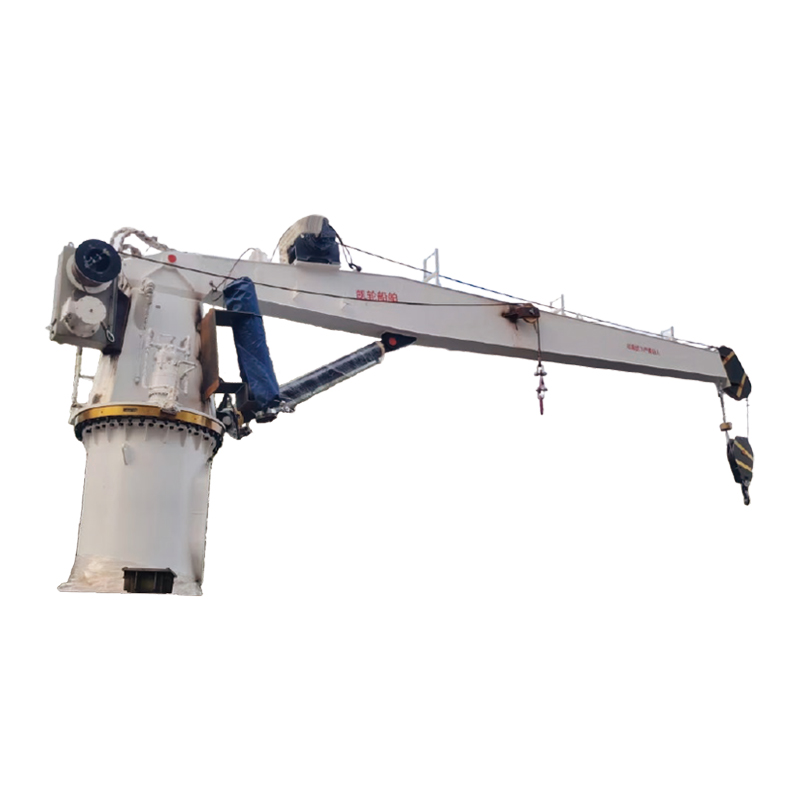
Single-arm rescue boat/raft lowering and lowering equipment
A review of maritime accident reports in recent years reveals that the root cause of many tragedies lies in hidden hazards relating to the finer details of lowering mechanisms: on one occasion, during a lifeboat recovery exercise following an abandon-ship drill, a fully loaded lifeboat fell from a great height and landed upside down due to a failure in the hook limit switch interlock, resulting in the tragic disappearance of two crew members; During Port State Control (PSC) inspections at numerous domestic ports, defects such as jammed steel wires in release mechanisms, malfunctioning speed control valves, corroded and failed limit switches, and hooks detaching whilst under load before fully resetting have frequently been identified. Between 2025 and the first half of 2026 alone, over 100 ocean-going vessels were detained at coastal ports nationwide due to non-compliant lifeboat launching equipment; the losses incurred per vessel due to detention—including delays to the voyage schedule, port demurrage and rectification costs—could reach as high as several hundred thousand yuan. The implementation of these new regulations represents systematic, mandatory rectification requirements introduced by the International Maritime Organisation in response to high-frequency safety incidents, tightening regulatory standards across four key dimensions: lowering speed, safety interlocks, power configuration and periodic inspections.
The key rectification requirements of these new regulations are divided into three main areas. Firstly, strict limits are imposed on the lowering speed of fully laden lifeboats, with the formula S = 0.4 + 0.02H clearly defined; the maximum lowering speed must not exceed 1.3 m/s. Older hydraulic winches commonly suffer from excessive lowering speeds and must be fitted with high-precision speed control valves. During the renewal survey, surveyors will conduct on-site measurements of the lowering speed; vessels failing to meet the specified standards will not be approved. Secondly, safety interlocks for hooks must be comprehensively upgraded. All in-service lowering devices must be fitted with dual mechanical and electrical reset limit devices to prevent accidental unhooking under load when the hook is not locked. Common defects such as corroded limit switches, switches covered by paint, or damaged wiring will be directly classified as retention defects. Thirdly, the power configuration for lifeboats has been standardised: in addition to gravity-assisted lowering, an independent energy storage power system must be fitted. Relying solely on the ship’s main power supply for emergency lowering is strictly prohibited; only light-duty lifeboats weighing less than 700 kg are eligible for an exemption. At the same time, the new SOLAS regulations will bring davits and winches under the management framework for statutory lifting equipment; load tests and non-destructive testing must be carried out every five years, and records of the replacement of key components and maintenance must be fully traceable throughout the entire process.
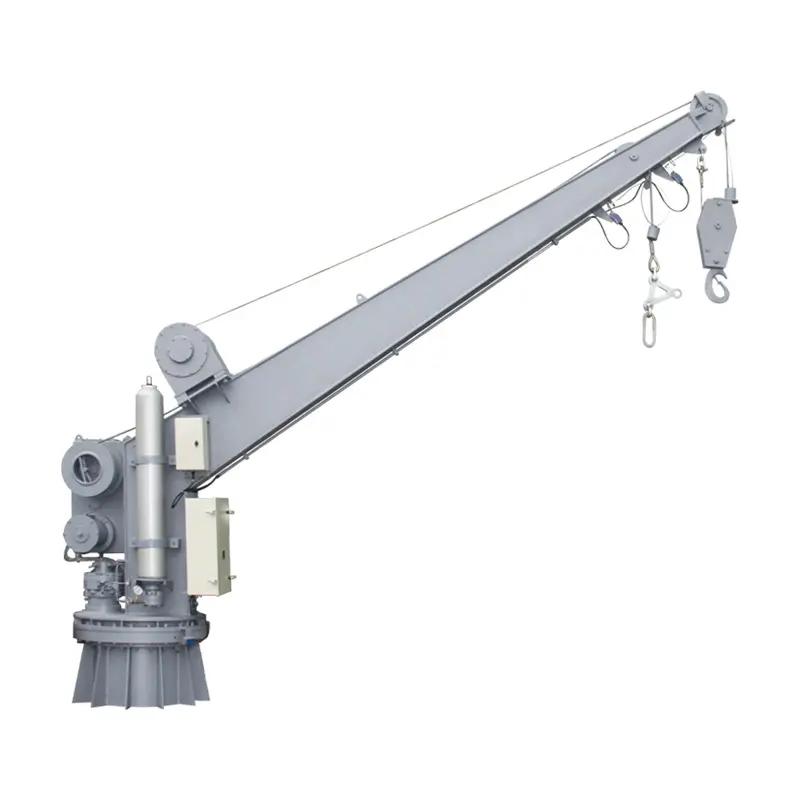
Single-arm rescue boat/raft launching apparatus with integrated crane
In addition to the rectification requirements for vessels currently in service, the revised national standard GB/T 16303-2024 ‘Free-fall Lifeboat Launching Systems’ will come into full effect in 2026. The old type approval certificates will become fully invalid in 2027, and newly built vessels must be fitted with intelligent launching equipment certified by the latest classification societies. The trend towards technological upgrading in the industry is clear, with electric servo winches gradually replacing traditional hydraulic equipment. Equipped with real-time load monitoring, automatic fault logging and stress warning functions, these winches not only meet PSC data traceability requirements but also enable the early prediction of fatigue damage to slings and hydraulic cylinders; High-strength, corrosion-resistant alloy structural components and modular integrated designs have become the industry standard, significantly reducing the costs of corrosion prevention, maintenance and replacement during a vessel’s operational life. Specialised vessels such as offshore wind farm maintenance vessels and LNG carriers have already taken the lead in upgrading to intelligent hoisting and lowering equipment.
As a Taizhou-based specialist service provider with extensive experience in marine electromechanical systems and the maintenance and retrofitting of lifesaving equipment, Taizhou Kailun Marine Electrical & Mechanical Co., Ltd. leverages the strengths of the Yangtze River Delta shipbuilding industry cluster. The company holds qualifications for equipment maintenance and technical retrofitting services recognised by multiple classification societies, including CCS, DNV and LR, and is able to provide major shipowners with one-stop solutions tailored to the new regulations, covering lowering speed calibration, the installation of hook interlocks, non-destructive testing of ageing davits, electrification upgrades and annual maintenance inspections, thereby precisely mitigating the risk of detention by Port State Control (PSC) and facilitating efficient, compliant clearance for vessels. We would like to remind all shipowners that the current window for compliance modifications is limited. With the launch of concentrated special inspections by port states worldwide, the timeframe for subsequent rectifications will continue to shrink. We therefore recommend completing equipment inspections, hazard identification and upgrade works in advance to safeguard the fundamental safety of maritime navigation.
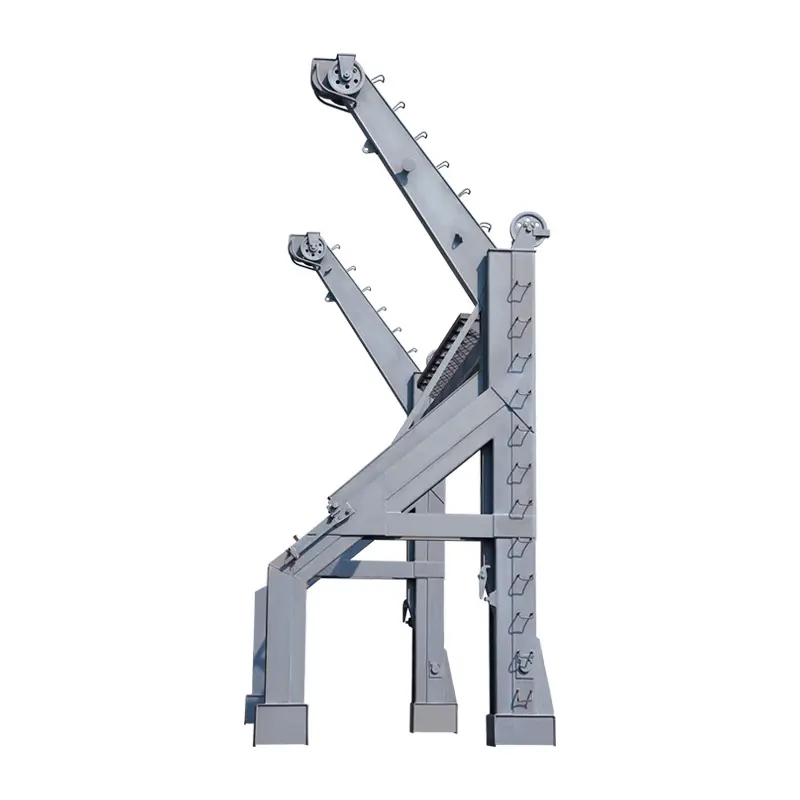
Gravity Luffing Arm Davit
Source: Taizhou Kailun Marine Electrical & Mechanical Co., Ltd.
References
1. International Maritime Organisation. Resolution MSC.554 (108) ‘Amendments to the International Life-Saving Appliance Code (LSA Code)’ [S]. Adopted on 23 May 2024; mandatory entry into force on 1 January 2026
2. International Maritime Organisation. Resolution MSC.532 (107) ‘Amendments to Chapter II-1 of the 1974 International Convention for the Safety of Life at Sea (SOLAS) (Regulation II-1/3-13: Mandatory regulatory provisions for lifting equipment)’ [S]. Adopted in 2023; to come into force on 1 January 2026
3. State Administration for Market Regulation, National Standardisation Administration. GB/T 16303-2024 Ships and Marine Technology – Free-fall Lifeboat Launching Arrangements [S]. Published on 26 October 2024, to come into force on 1 February 2025.