
Which vessels must retrofit their lifeboat launching systems? A detailed analysis of the new 2026 IMO regulations is now available
Kailun Marine Electrical & Mechanical2026-07-13
With the formal entry into force of IMO Resolution MSC.554 (108) on 1 January 2026, lifeboat launching appliances are facing a new round of compliance changes. Many shipowners are left with numerous questions: Which vessels actually require upgrading? Do older vessels need to be retrofitted? Do only newly built vessels have to comply with the new standards? By clarifying the scope of application, the retrofit requirements and the inspection milestones in light of the SOLAS Convention requirements and recent Port State Control (PSC) inspection priorities, shipping companies can avoid the risk of detention and minimise unnecessary delays and rectification costs.
As defined in official IMO documents, the new regulations set out in MSC.554-108 are to be implemented in two phases. The first category comprises mandatory requirements for new installations: for new ocean-going vessels for which construction contracts are signed or keel-laying takes place on or after 1 January 2026, the factory-fitted davits, winches and hook release mechanisms must strictly comply with the new regulations; the lowering speed of a fully loaded lifeboat must be calculated using the formula S = 0.4 + 0.02H, and must not exceed 1.3 m/s; hooks must be fitted with a mechanical and electrical dual-reset interlocks; the hook must not bear the load of the lifeboat until it is fully locked, thereby eliminating at source any accidental disengagement of the lifeboat during the recovery process.
The rectification requirements for Category II existing older ships are a key focus for the industry. The Convention stipulates that for existing ships completed before 2026, there is no mandatory requirement to replace the equipment as a whole; however, if winches, hook assemblies or hydraulic control valves are replaced during subsequent renewal surveys, the newly fitted components must comply with the 2026 edition of the LSA Code. Furthermore, SOLAS II 1/3 13, which comes into force simultaneously, stipulates that for ships of 500 gross tonnes or more engaged in international voyages, davits are formally classified as lifting equipment subject to regulatory oversight, requiring load tests and non-destructive testing to be carried out every five years; this requirement is binding on all ocean-going vessels in service. Even if the equipment is not replaced in its entirety, should a surveyor, during an annual or intermediate survey, find that the lowering speed exceeds the limit, limit switches are faulty, or the hook locking mechanism is defective, the shipowner must carry out corrective measures such as replacing the speed control valve and installing interlocks; otherwise, the safety certificate will not be endorsed and the vessel will be detained by the Port State Control (PSC).
Taking into account the latest inspection checklists from the Tokyo Memorandum and the Paris Memorandum, the following categories of vessels are the primary focus of this rectification campaign. Firstly, large bulk carriers, oil tankers and container ships: on these vessels, the height of the crane jib above the waterline is generally too high, and older hydraulic winches frequently lower loads at excessive speeds; in recent years, the number of cases where vessels have been detained due to excessive lowering speeds has remained high; Secondly, vessels equipped with single-hook load-release devices: older hook models lack a reset interlock, making this a frequent finding during maritime inspections; furthermore, older vessels in service for over 10 years, where slings, hydraulic cylinders and seals have been subjected to long-term corrosion from marine salt spray, with internal wear that is not visible to the naked eye; even if temporarily serviceable, they are highly likely to be required to replace components during the certificate renewal survey; For rescue craft on offshore wind farm maintenance vessels and offshore engineering vessels, in addition to controlling lowering speeds, the energy storage power systems must also meet the required standards; it is not permissible to rely solely on the vessel’s main power supply to lower lifeboats and rafts, with exemptions applying only to light-duty rescue craft weighing less than 700 kg.
In addition to hardware upgrades, new standards have also been introduced for maintenance procedures and record-keeping. In line with the amendments to Resolution MSC.559 (108), maintenance records for lifeboat winches and release mechanisms, evidence of component replacement and load test reports must be retained in full; these may be accessed and verified by surveyors and port State control inspectors at any time. Maintenance personnel must hold qualifications recognised by the classification society, and maintenance carried out by unauthorised personnel will be directly classified as a serious defect. Domestically, this is implemented in accordance with GB/T 16303 2024; the previous version of the type approval certificate will expire in 2027, and inspection standards for seagoing vessels operating domestically are also being tightened in line with international standards. Many shipowners harbour a sense of complacency, believing that as long as lifeboats have been lowered normally, no rectification is required. However, numerous lifeboat falling incidents in recent years have confirmed that latent faults are difficult to detect through crew members’ routine inspections, and the cost of waiting until an accident occurs is extremely high.
Many shipowners are unsure when to carry out refits; here are some recommendations for sensible planning: for vessels with a long time remaining before their renewal survey, equipment inspections can be arranged in advance and components replaced in stages; for vessels due to undergo a renewal survey shortly, it is essential to complete speed control calibration and limit switch upgrades before the survey, to avoid rushed rectifications in the run-up to the survey, which can drive up repair costs.
As a Taizhou-based service provider specialising in marine electromechanical systems and the maintenance and technical upgrading of lifesaving equipment, Taizhou Kailun Marine Electrical & Mechanical Co., Ltd.is well-versed in the inspection standards of classification societies such as CCS, DNV and LR. We offer a comprehensive range of services, including actual speed measurements for lowering operations, the installation of hook interlocks, non-destructive testing of davits, the overhaul and commissioning of ageing winches, and the organisation of maintenance records. We provide compliance solutions to shipowners, helping vessels pass inspections smoothly and avoid being detained by Port State Control (PSC). Shipowners should take advantage of the current window of opportunity to carry out risk assessments as early as possible, thereby safeguarding the fundamental safety of maritime navigation.
Source: Taizhou Kailun Marine Electrical & Mechanical Co., Ltd.
References
1. International Maritime Organisation. MSC.554 (108) ‘Amendments to the LSA Code’ [S]. Adopted on 23 May 2024, 1 January 2026 01 Implementation
2. SOLAS Convention, Part II, Chapter 1, Section 13: Provisions on the Management of Lifting Equipment
3. MSC.559 (108): Resolution on Amendments to the Maintenance and Servicing of Life-Saving Appliances
4. GB/T 16303:2024: National Standard for Free-Fall Lifeboat Launching Systems
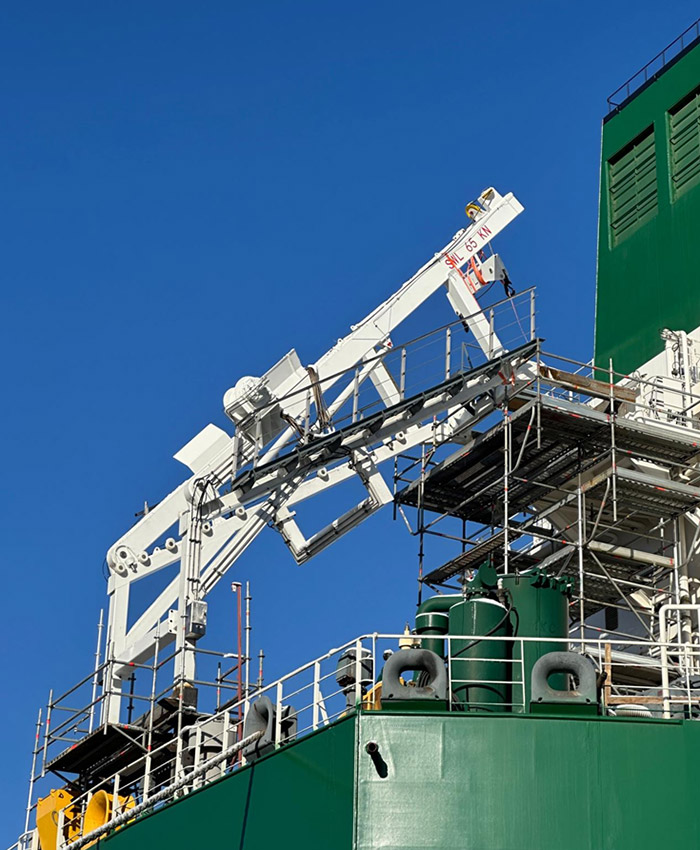
The Launching Appliances of Free-Fall Lifeboat
As defined in official IMO documents, the new regulations set out in MSC.554-108 are to be implemented in two phases. The first category comprises mandatory requirements for new installations: for new ocean-going vessels for which construction contracts are signed or keel-laying takes place on or after 1 January 2026, the factory-fitted davits, winches and hook release mechanisms must strictly comply with the new regulations; the lowering speed of a fully loaded lifeboat must be calculated using the formula S = 0.4 + 0.02H, and must not exceed 1.3 m/s; hooks must be fitted with a mechanical and electrical dual-reset interlocks; the hook must not bear the load of the lifeboat until it is fully locked, thereby eliminating at source any accidental disengagement of the lifeboat during the recovery process.
The rectification requirements for Category II existing older ships are a key focus for the industry. The Convention stipulates that for existing ships completed before 2026, there is no mandatory requirement to replace the equipment as a whole; however, if winches, hook assemblies or hydraulic control valves are replaced during subsequent renewal surveys, the newly fitted components must comply with the 2026 edition of the LSA Code. Furthermore, SOLAS II 1/3 13, which comes into force simultaneously, stipulates that for ships of 500 gross tonnes or more engaged in international voyages, davits are formally classified as lifting equipment subject to regulatory oversight, requiring load tests and non-destructive testing to be carried out every five years; this requirement is binding on all ocean-going vessels in service. Even if the equipment is not replaced in its entirety, should a surveyor, during an annual or intermediate survey, find that the lowering speed exceeds the limit, limit switches are faulty, or the hook locking mechanism is defective, the shipowner must carry out corrective measures such as replacing the speed control valve and installing interlocks; otherwise, the safety certificate will not be endorsed and the vessel will be detained by the Port State Control (PSC).
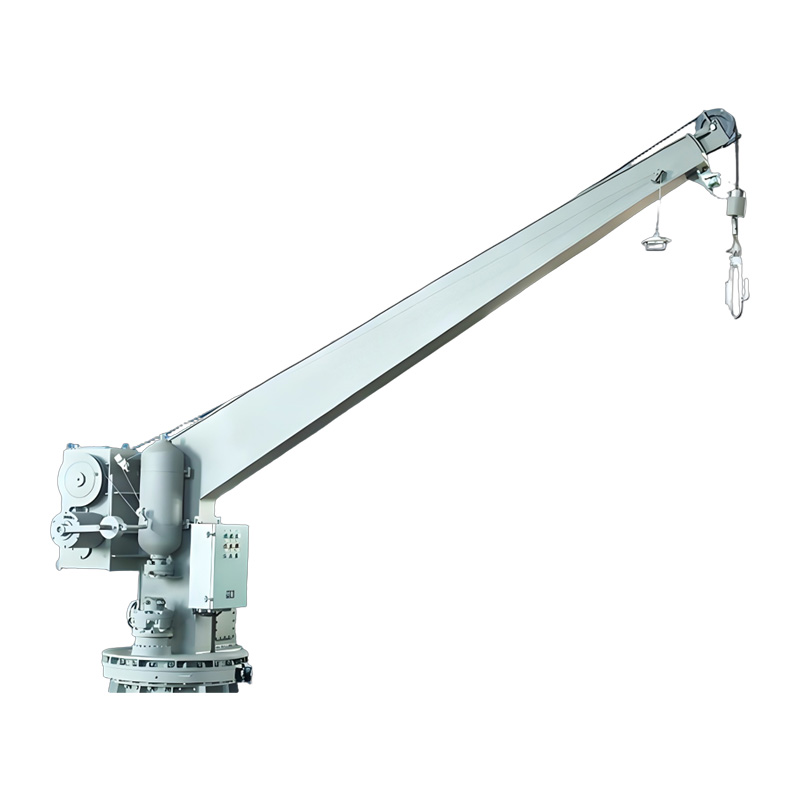
Single-arm rescue boat/raft lowering and lowering equipment
Taking into account the latest inspection checklists from the Tokyo Memorandum and the Paris Memorandum, the following categories of vessels are the primary focus of this rectification campaign. Firstly, large bulk carriers, oil tankers and container ships: on these vessels, the height of the crane jib above the waterline is generally too high, and older hydraulic winches frequently lower loads at excessive speeds; in recent years, the number of cases where vessels have been detained due to excessive lowering speeds has remained high; Secondly, vessels equipped with single-hook load-release devices: older hook models lack a reset interlock, making this a frequent finding during maritime inspections; furthermore, older vessels in service for over 10 years, where slings, hydraulic cylinders and seals have been subjected to long-term corrosion from marine salt spray, with internal wear that is not visible to the naked eye; even if temporarily serviceable, they are highly likely to be required to replace components during the certificate renewal survey; For rescue craft on offshore wind farm maintenance vessels and offshore engineering vessels, in addition to controlling lowering speeds, the energy storage power systems must also meet the required standards; it is not permissible to rely solely on the vessel’s main power supply to lower lifeboats and rafts, with exemptions applying only to light-duty rescue craft weighing less than 700 kg.
In addition to hardware upgrades, new standards have also been introduced for maintenance procedures and record-keeping. In line with the amendments to Resolution MSC.559 (108), maintenance records for lifeboat winches and release mechanisms, evidence of component replacement and load test reports must be retained in full; these may be accessed and verified by surveyors and port State control inspectors at any time. Maintenance personnel must hold qualifications recognised by the classification society, and maintenance carried out by unauthorised personnel will be directly classified as a serious defect. Domestically, this is implemented in accordance with GB/T 16303 2024; the previous version of the type approval certificate will expire in 2027, and inspection standards for seagoing vessels operating domestically are also being tightened in line with international standards. Many shipowners harbour a sense of complacency, believing that as long as lifeboats have been lowered normally, no rectification is required. However, numerous lifeboat falling incidents in recent years have confirmed that latent faults are difficult to detect through crew members’ routine inspections, and the cost of waiting until an accident occurs is extremely high.
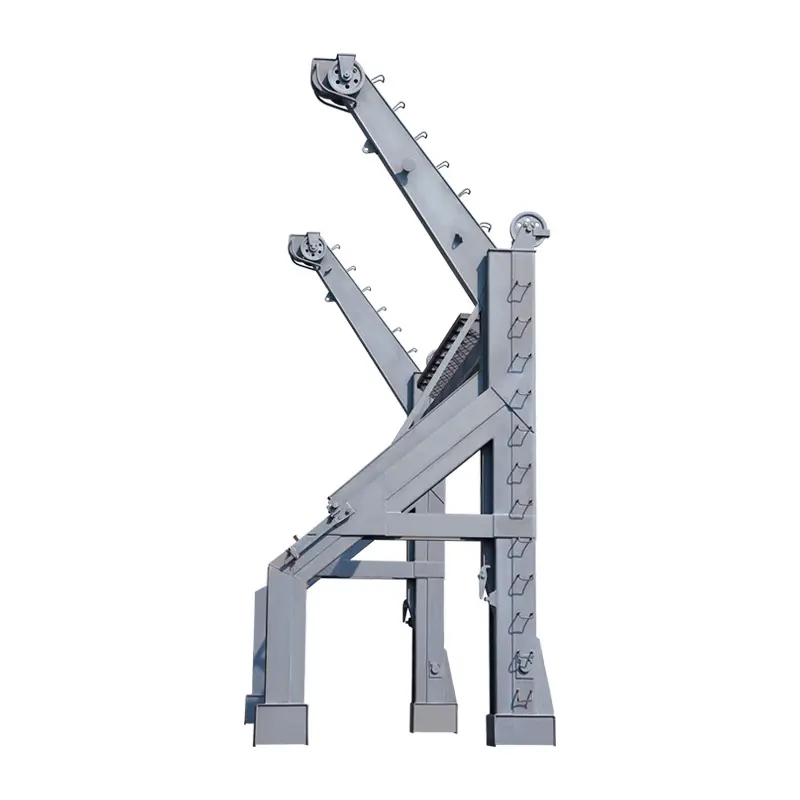
Gravity Luffing Arm Davit
Many shipowners are unsure when to carry out refits; here are some recommendations for sensible planning: for vessels with a long time remaining before their renewal survey, equipment inspections can be arranged in advance and components replaced in stages; for vessels due to undergo a renewal survey shortly, it is essential to complete speed control calibration and limit switch upgrades before the survey, to avoid rushed rectifications in the run-up to the survey, which can drive up repair costs.
As a Taizhou-based service provider specialising in marine electromechanical systems and the maintenance and technical upgrading of lifesaving equipment, Taizhou Kailun Marine Electrical & Mechanical Co., Ltd.is well-versed in the inspection standards of classification societies such as CCS, DNV and LR. We offer a comprehensive range of services, including actual speed measurements for lowering operations, the installation of hook interlocks, non-destructive testing of davits, the overhaul and commissioning of ageing winches, and the organisation of maintenance records. We provide compliance solutions to shipowners, helping vessels pass inspections smoothly and avoid being detained by Port State Control (PSC). Shipowners should take advantage of the current window of opportunity to carry out risk assessments as early as possible, thereby safeguarding the fundamental safety of maritime navigation.
Source: Taizhou Kailun Marine Electrical & Mechanical Co., Ltd.
References
1. International Maritime Organisation. MSC.554 (108) ‘Amendments to the LSA Code’ [S]. Adopted on 23 May 2024, 1 January 2026 01 Implementation
2. SOLAS Convention, Part II, Chapter 1, Section 13: Provisions on the Management of Lifting Equipment
3. MSC.559 (108): Resolution on Amendments to the Maintenance and Servicing of Life-Saving Appliances
4. GB/T 16303:2024: National Standard for Free-Fall Lifeboat Launching Systems